
Food symptom diary & trigger tracker for iOS
Stop guessing which foods affect you
Log meals, track symptoms, and scan any food. Food & Feel helps you spot patterns between what you eat and how you feel — so you can explore possible triggers for bloating, IBS-related symptoms, and food sensitivities together with your doctor.
- Ingredient-level meal logging
- Barcode & photo scanning
- Low FODMAP · histamine · lactose · gluten aware

How it works
Four steps from guessing to understanding
A food and symptom diary without the friction — log, feel, learn, repeat.
- 1
Log your meals
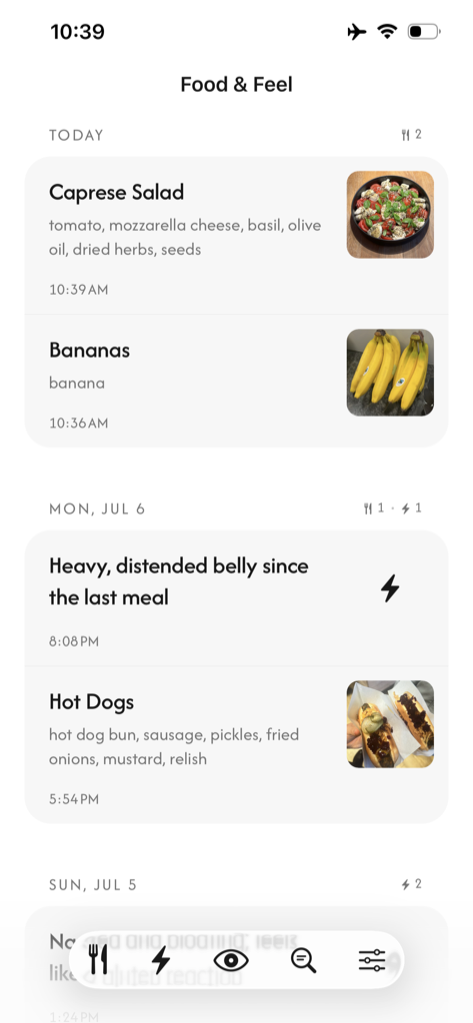
Snap a photo, scan a barcode, or type it out.
- 2
Track how you feel
Tap a symptom the moment it shows up.
- 3
Spot your patterns
Insights surface the ingredients worth a closer look.
- 4
Check before you eat
Scan foods and menus against your patterns.
Inside the app
From food diary to food insights
Everything you need to explore the connection between meals and symptoms — logging, scanning, checking, and pattern insights in one app.
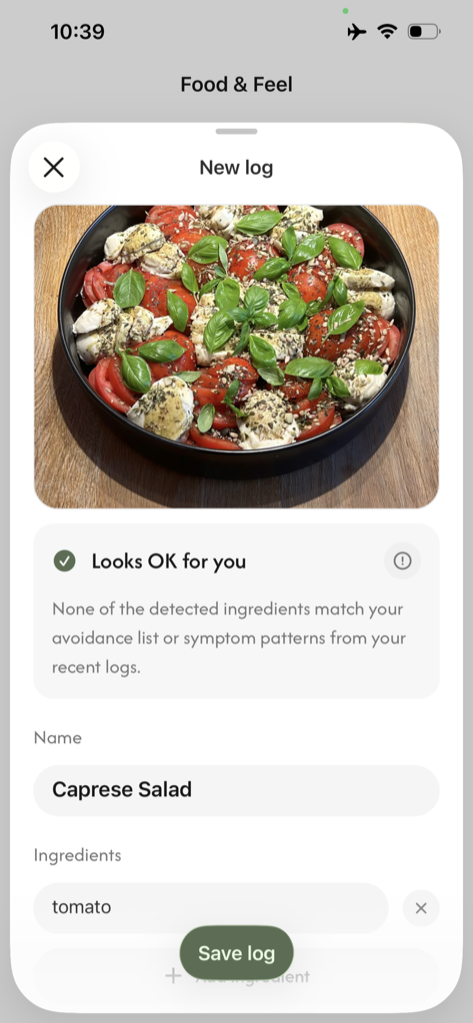
Track meals & symptoms
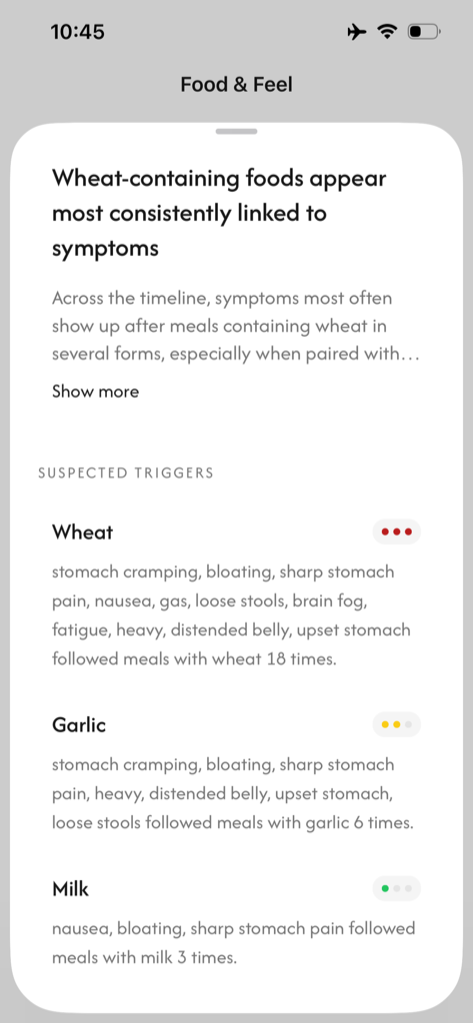
Discover your food patterns
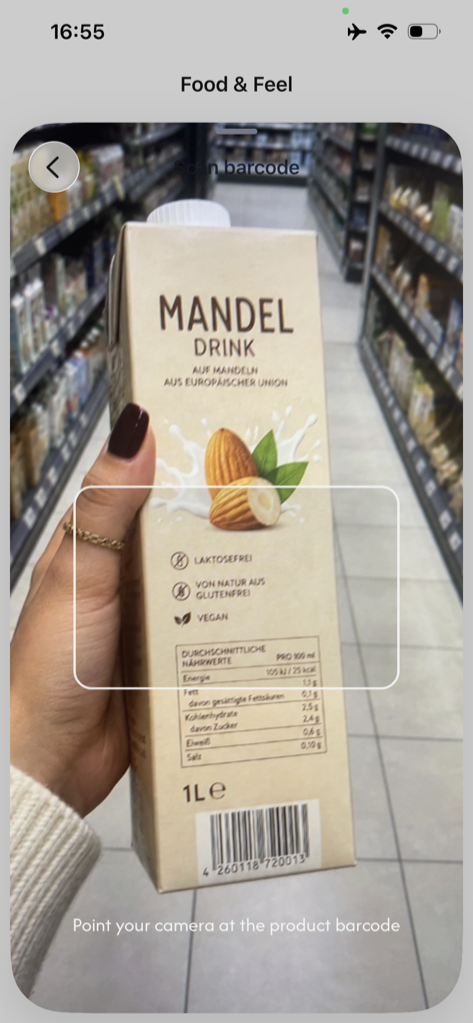
Scan any food instantly
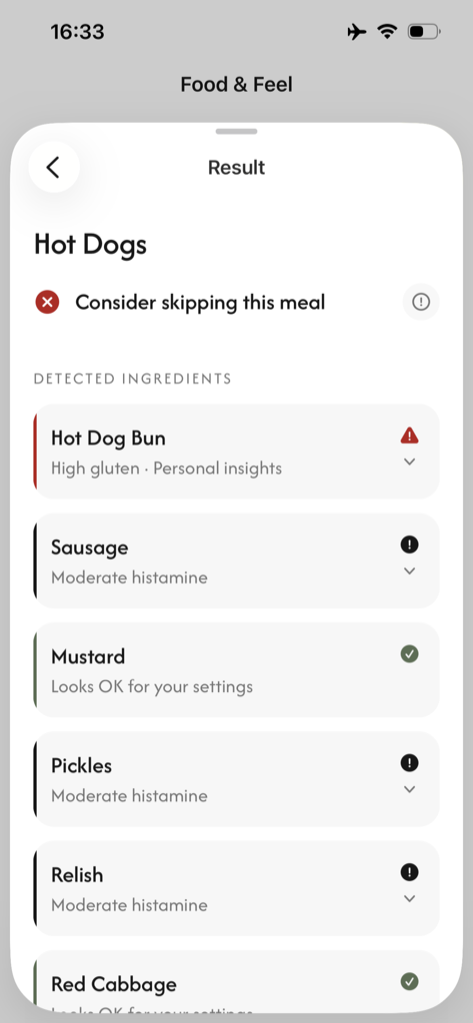
Understand every ingredient
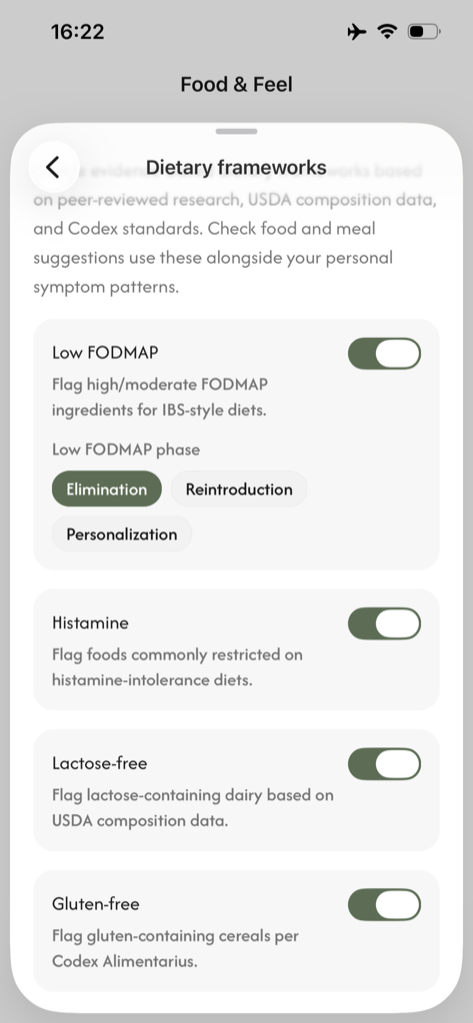
Check foods for FODMAP & more
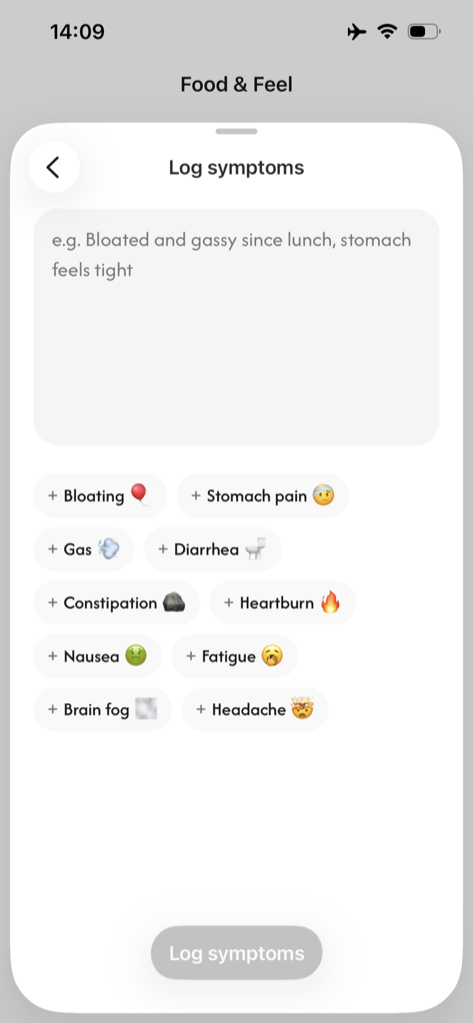
Log symptoms in seconds
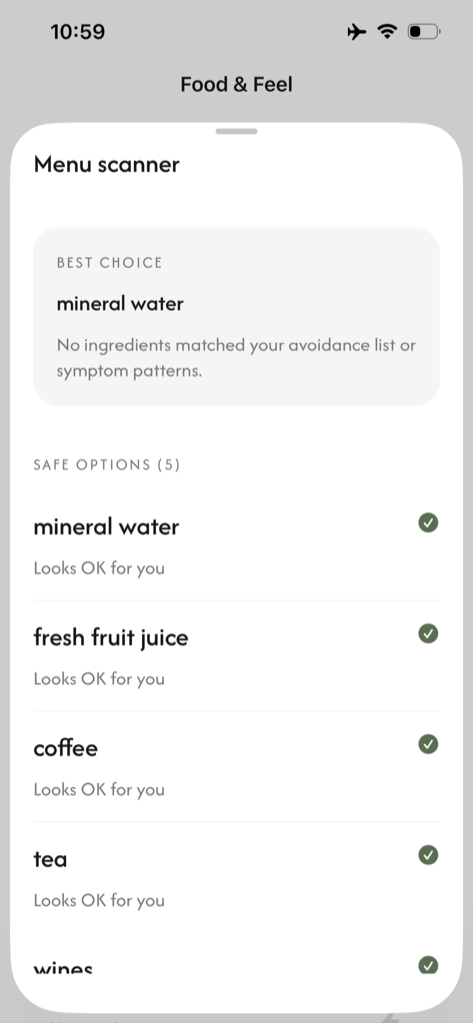
Check restaurant menus
Get the app
Your food symptom diary, in your pocket
Download Food & Feel on the App Store and log your first meal in under a minute. The sooner you start tracking, the more your logs have to show you.

Available on iPhone
Guides
IBS triggers, food intolerances & FODMAP
Practical guides for the questions that brought you here — how to explore possible triggers, make sense of symptoms, and track the diets carefully. Educational content, not medical advice.
- how to find IBS trigger foods
How to Explore Your Possible IBS Trigger Foods (Step by Step)
IBS triggers are personal — wheat, garlic, onion, and dairy are commonly reported, but yours may differ. Learn how a food and symptom diary can help you explore possible patterns.
Read the guide → - why am I bloated after eating
Why Am I Bloated After Eating? Common Causes & How to Explore Yours
Bloating after eating is often linked to fermentable carbs (FODMAPs), food intolerances, or eating habits. Learn about common possible causes and how tracking may help.
Read the guide → - how to keep a food and symptom diary
How to Keep a Food and Symptom Diary You’ll Actually Stick With
A food and symptom diary is a widely recommended first step for exploring digestive symptoms. Learn what to log, how long to track, and how to make patterns easier to see.
Read the guide → - low FODMAP diet for beginners
Low FODMAP Diet for Beginners: Phases, Foods & Checking What You Eat
New to low FODMAP? Understand the elimination, reintroduction, and personalization phases — and how an app can help you check foods for high-FODMAP ingredients.
Read the guide → - how to do an elimination diet
How to Do an Elimination Diet Without Losing Your Mind
An elimination diet removes suspect foods for a few weeks, then reintroduces them one at a time. Learn how the approach works and how tracking can support it.
Read the guide → - food intolerance symptoms
Food Intolerance Symptoms: Commonly Reported Signs & How to Track Them
Bloating, gas, fatigue, headaches, and brain fog after eating are commonly reported with food intolerances. Learn about the signs and how tracking may help.
Read the guide → - histamine intolerance food list
Histamine Intolerance Food List: Commonly Restricted Foods & How to Check
Foods commonly restricted on histamine-intolerance diets include aged cheese, cured meats, wine, and fermented foods. See the list and how to check products for them.
Read the guide → - signs of lactose intolerance
Signs of Lactose Intolerance: What to Track & When to Get Tested
Bloating, gas, and diarrhea after dairy are commonly reported signs of lactose intolerance. Learn what to track and when to ask a doctor about formal testing.
Read the guide → - gluten sensitivity symptoms without celiac
Gluten Sensitivity Without Celiac: Reported Symptoms & How to Track Them
Bloating, brain fog, and fatigue after wheat — but negative celiac tests? Learn what’s discussed around non-celiac gluten sensitivity and how tracking may help.
Read the guide → - eating out with IBS
Eating Out with IBS: Practical Ways to Order More Comfortably
Restaurant food is full of hidden garlic, onion, and cream. Practical strategies for eating out with IBS — and how to check menu dishes against your own patterns.
Read the guide →
FAQ
Frequently asked questions
How can I explore my possible IBS trigger foods?
A common approach is to log meals at the ingredient level, log symptoms with their timing, and look for foods that repeatedly precede symptoms over 2–4 weeks. Patterns across many meals — not single bad days — tend to be more informative. Discuss what you find with a doctor or dietitian.
Learn more → Why might I be bloated after meals?
Post-meal bloating is often associated with fermentable carbohydrates (FODMAPs) like onion, garlic, wheat, and lactose, though eating habits and underlying conditions can also play a role. Because reactions can be delayed and dose-dependent, tracking meals and symptoms for a few weeks may help you and your doctor explore possible causes.
Learn more → How do I keep a food and symptom diary?
Record every meal with its individual ingredients, every symptom with time and severity, and keep it up for at least two weeks. Ingredient-level detail plus consistent timing makes potential patterns easier to see — and gives your doctor or dietitian something useful to work with.
Learn more → How can I check if a food is low FODMAP?
FODMAPs are fermentable carbs (found in onion, garlic, wheat, certain fruits, and lactose-containing dairy) that are commonly discussed in connection with IBS symptoms. The low FODMAP diet runs in three phases — elimination, reintroduction, personalization — and is best done with professional guidance. A food checker that flags high-FODMAP ingredients can make each phase easier to follow.
Learn more → How does an elimination diet work?
In a typical elimination diet, suspected trigger foods are removed for 2–4 weeks, then reintroduced one at a time with a few days between tests, while symptoms are tracked throughout. Consistent tracking is what makes the observations useful — and it’s best done with guidance from a doctor or dietitian.
Learn more → What are common symptoms of a food intolerance?
Commonly reported food intolerance symptoms include bloating, gas, stomach pain, diarrhea, constipation, and also non-gut symptoms like fatigue, headaches, and brain fog — often delayed and dose-dependent, which is why they can be hard to connect to specific foods without tracking. A doctor can help you interpret what you observe.
Learn more → Which foods are commonly restricted on a histamine-intolerance diet?
Aged and fermented foods top most lists: aged cheese, cured and processed meats, wine and beer, sauerkraut, soy sauce, vinegar, canned fish, and leftovers. Tomatoes, spinach, avocado, and citrus also appear frequently. Individual responses vary — a doctor can help you work out what’s relevant for you.
Learn more → Could I be lactose intolerant?
Commonly reported signs are bloating, gas, cramps, and diarrhea roughly 30 minutes to 2 hours after milk, cream, ice cream, or soft cheese. Tracking dairy intake against symptoms for a couple of weeks can give you useful observations — and a doctor can order a hydrogen breath test for a proper diagnosis.
Learn more → Can I react to gluten without having celiac disease?
Some people report bloating, stomach pain, fatigue, brain fog, and headaches after gluten despite negative celiac tests — this is often discussed as non-celiac gluten sensitivity. Research also suggests some of these reactions may relate to wheat FODMAPs (fructans) rather than gluten itself. Tracking symptoms around wheat, ideally with a doctor involved, can help you explore what applies to you.
Learn more → How can I eat out at restaurants with IBS?
Strategies many people find helpful: scout the menu in advance, favour simple grilled dishes with sauces on the side, ask about garlic and onion in bases, and check dishes against the patterns you’ve noticed in your own logs before ordering. It won’t make any meal risk-free, but it can make choices more informed.
Learn more → Is Food & Feel a medical app?
No. Food & Feel is a wellness and tracking app. It is not a regulated medical device and does not provide medical advice, diagnosis, or treatment. It helps you collect and understand your own food and symptom data — which you can also share with your doctor or dietitian.
Which diets and frameworks does Food & Feel support?
Food & Feel checks foods against Low FODMAP (with elimination, reintroduction, and personalization phases), histamine awareness, lactose-free, and gluten-free frameworks, drawing on published research, USDA composition data, and Codex standards. These checks are informational — no database is exhaustive, and they don’t replace advice from your doctor or dietitian.
Learn more →
Stop guessing. Start understanding.
The patterns worth exploring are in your everyday meals — a food and symptom diary helps you see them. Start yours today.