
Signs of Lactose Intolerance: What to Track & When to Get Tested
Quick answer
Commonly reported signs are bloating, gas, cramps, and diarrhea roughly 30 minutes to 2 hours after milk, cream, ice cream, or soft cheese. Tracking dairy intake against symptoms for a couple of weeks can give you useful observations — and a doctor can order a hydrogen breath test for a proper diagnosis.
Lactose intolerance is one of the most common food intolerances in the world. Only a doctor can diagnose it — but methodical tracking beats "cutting dairy and hoping", and gives you something concrete to bring to that conversation.
The commonly reported pattern
When the body produces less lactase enzyme, undigested lactose travels to the colon and ferments. The commonly reported result: bloating, gas, cramps, and often diarrhea starting roughly 30 minutes to 2 hours after lactose-containing dairy.
It’s also often dose-dependent — many people report handling small amounts (a splash of milk in coffee, hard cheeses, butter) while reacting to a latte, ice cream, or cream sauces. So "sometimes dairy seems fine" doesn’t settle the question either way.
Where lactose hides
- Obvious: milk, cream, ice cream, soft cheeses, milk chocolate.
- Less obvious: whey protein powders, baked goods, cream soups, salad dressings, instant sauces, some medications.
- Often lower in lactose: hard aged cheeses (parmesan, aged cheddar), butter, and lactose-free labelled dairy — individual tolerance varies.
What tracking can (and can’t) tell you
Tracking dairy intake and symptoms for a couple of weeks lets you see whether they tend to move together. Some people then try a short dairy-light period, with guidance, and watch what changes. Whatever you observe, formal answers come from a doctor — a hydrogen breath test can assess lactose malabsorption, and it’s worth ruling out milk-protein allergy and celiac disease if things don’t fit the pattern.
Tracking dairy with Food & Feel
Food & Feel’s lactose-free framework flags lactose-containing dairy using USDA composition data — helpful for keeping your observations clean.
-
Turn on lactose-free checking
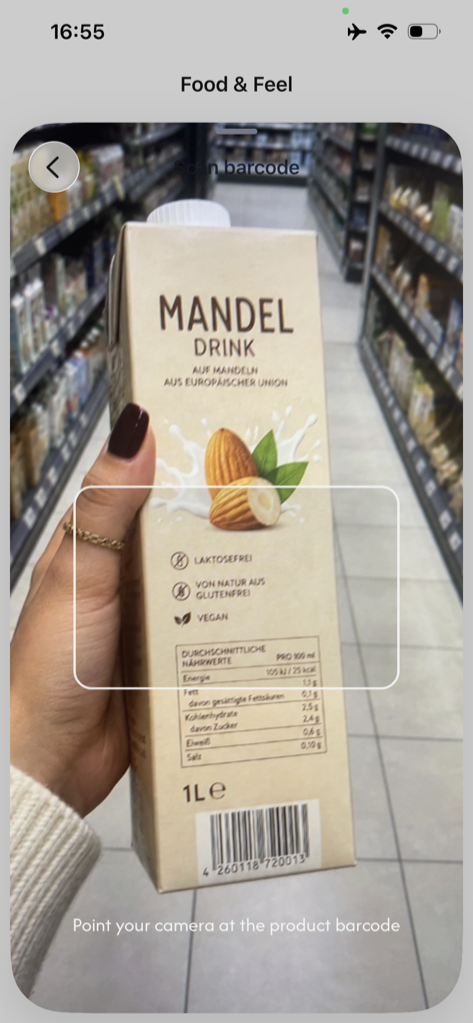
Enable the Lactose-free framework and scanned foods, labels, and barcodes are checked for lactose-containing dairy automatically.
-
Catch the hidden lactose
Whey in protein powder, milk solids in baked goods, cream in sauces — ingredient-level scanning helps find sources that would otherwise slip through.
-
Log symptoms with timing
The commonly reported 30-minutes-to-2-hours window is much easier to look for when meals and symptoms sit on the same timeline.
-
Bring your record to the doctor
Insights make before/after comparisons easy to see — observations you can take to a doctor, who can arrange formal testing.

Food & Feel is a wellness and tracking app. It is not a regulated medical device and does not provide medical advice, diagnosis, or treatment. Always talk to a doctor or registered dietitian about persistent symptoms.