
Food Intolerance Symptoms: Commonly Reported Signs & How to Track Them
Quick answer
Commonly reported food intolerance symptoms include bloating, gas, stomach pain, diarrhea, constipation, and also non-gut symptoms like fatigue, headaches, and brain fog — often delayed and dose-dependent, which is why they can be hard to connect to specific foods without tracking. A doctor can help you interpret what you observe.
A food intolerance is generally different from a food allergy: rather than an immediate immune reaction, it tends to involve digestive or systemic discomfort that builds hours after eating. If any of this sounds familiar, tracking can help you gather observations to discuss with a professional.
Commonly reported symptoms
- Digestive: bloating, gas, stomach pain or cramping, diarrhea, constipation, nausea, heartburn.
- Systemic: fatigue after meals, headaches, brain fog, skin flushing or itching (often mentioned in connection with histamine).
- Timing: often anywhere from 30 minutes to 48 hours after a food — typically later than allergy reactions.
- Dose-dependence: small amounts may seem fine while larger amounts or repeated exposure coincide with symptoms.
Commonly discussed culprits
Lactose (dairy), fructose and other FODMAPs (onion, garlic, wheat, certain fruits), histamine (aged cheese, cured meats, wine, fermented foods), gluten, caffeine, and additives like sulphites are all frequently discussed. Many people find only one or two seem relevant — the challenge is exploring which.
How to explore yours
Because reactions can be delayed and dose-dependent, a widely used approach is a detailed food and symptom diary for 2–4 weeks, followed by careful elimination and reintroduction of the strongest suspects — ideally with guidance from a doctor or dietitian, who can also rule out other conditions.
If symptoms are severe, sudden, or include swelling or breathing difficulty, seek medical care immediately — those signs need urgent professional attention.
Tracking possible intolerances with Food & Feel
Food & Feel connects what you eat to how you feel in one timeline — including the delayed, easy-to-miss connections — so you have observations rather than hunches.
-
Track more than gut symptoms
Log fatigue, brain fog, and headaches alongside digestive symptoms — systemic patterns are often the overlooked half of the picture.
-
Get ingredient-level detail automatically
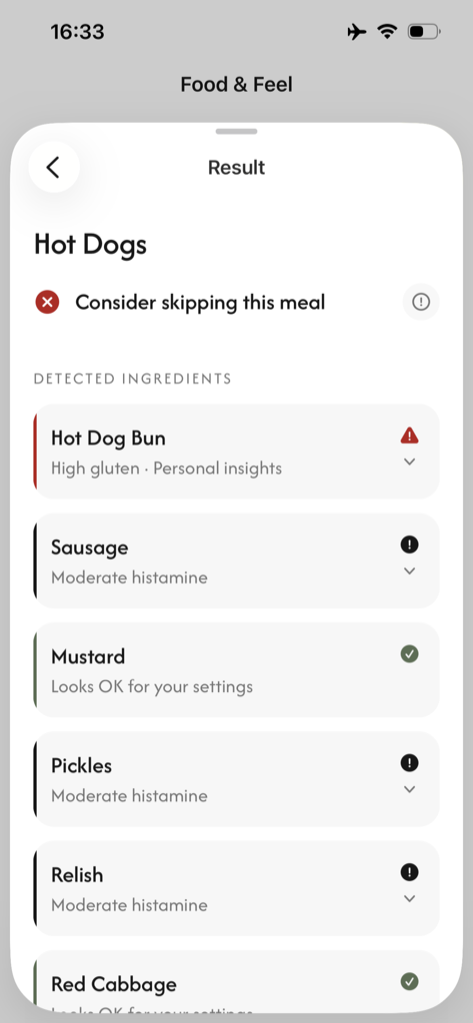
Photos, labels, and barcodes are broken into ingredients, so lactose, histamine-associated foods, and gluten are visible in every log.
-
See your suspects highlighted
Insights surface which ingredients have most frequently preceded your logged symptoms — across days, doses, and delayed patterns.
-
Explore with frameworks
Toggle on lactose-free, histamine, gluten-free, or low FODMAP checking to explore a hypothesis — foods you scan are checked against your selected frameworks.

Food & Feel is a wellness and tracking app. It is not a regulated medical device and does not provide medical advice, diagnosis, or treatment. Always talk to a doctor or registered dietitian about persistent symptoms.