
How to Keep a Food and Symptom Diary You’ll Actually Stick With
Quick answer
Record every meal with its individual ingredients, every symptom with time and severity, and keep it up for at least two weeks. Ingredient-level detail plus consistent timing makes potential patterns easier to see — and gives your doctor or dietitian something useful to work with.
A food and symptom diary is one of the most commonly recommended first steps when exploring unexplained digestive symptoms. It builds a record you can reflect on — and bring to appointments with your doctor or dietitian.
Many diaries get abandoned within a week, though. Here’s how to keep one going.
What to log (and the detail level that matters)
Four things, every day:
- Meals and snacks — broken into ingredients. "Sandwich" hides the wheat, butter, and pickles that might matter.
- Drinks — coffee, alcohol, carbonated drinks, and milk-based drinks are worth recording too.
- Symptoms — what, when, and how severe. Consider including non-gut symptoms like fatigue, headaches, and brain fog.
- Timing — the gap between eating and symptoms is useful information for you and your healthcare provider.
Why manual diaries are hard to keep up
Manual diaries tend to collapse under their own friction. Itemising every ingredient of every meal takes minutes each time, so entries often degrade into "pasta — fine" within a week. And even a diligently kept paper diary leaves the hardest part to you: cross-referencing weeks of entries to spot which ingredient keeps showing up before bad days.
Those two pain points — logging friction and pattern review — are where an app can help.
How long to track
Two weeks is a common minimum for meaningful observations; four is often better. Delayed reactions, dose thresholds, and weekly routines (weekend meals, restaurant visits) all need multiple cycles to show up.
Keeping your diary in Food & Feel
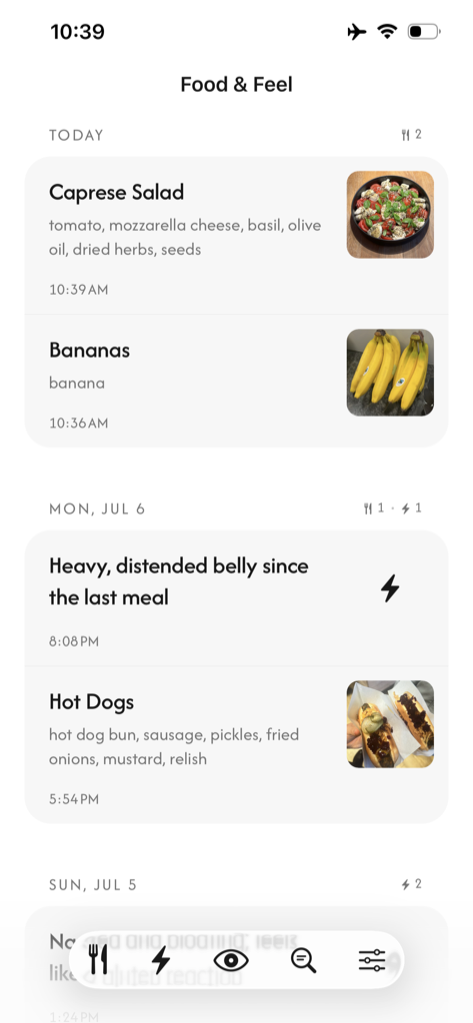
Food & Feel is a food and symptom diary designed to log in seconds and help you review your own data.
-
Photo in, ingredients out
Snap your plate or scan a label — Food & Feel helps detect and itemise ingredients, so entries carry useful detail with less typing.
-
Symptom chips, one tap each
Bloating, stomach pain, gas, diarrhea, constipation, heartburn, nausea, fatigue, brain fog, headache — tap and it’s logged with a timestamp.
-
Your timeline builds itself
Meals and symptoms sit side by side in one chronological diary, so you (and, if you choose, your doctor) can see the story of any day at a glance.
-
Pattern review is done for you
Instead of re-reading weeks of entries, open Insights: ingredients that have frequently preceded your logged symptoms are highlighted for you to explore.

Food & Feel is a wellness and tracking app. It is not a regulated medical device and does not provide medical advice, diagnosis, or treatment. Always talk to a doctor or registered dietitian about persistent symptoms.