
Gluten Sensitivity Without Celiac: Reported Symptoms & How to Track Them
Quick answer
Some people report bloating, stomach pain, fatigue, brain fog, and headaches after gluten despite negative celiac tests — this is often discussed as non-celiac gluten sensitivity. Research also suggests some of these reactions may relate to wheat FODMAPs (fructans) rather than gluten itself. Tracking symptoms around wheat, ideally with a doctor involved, can help you explore what applies to you.
You feel awful after bread and pasta, but your celiac test came back negative. This situation is widely discussed under the label non-celiac gluten sensitivity (NCGS) — and interestingly, wheat has a second, gluten-unrelated way of being relevant that’s worth knowing about.
Important first: talk to a doctor about ruling out celiac disease before removing gluten — celiac testing is generally only reliable while you’re still eating gluten.
Symptoms often reported around gluten
- Digestive: bloating, stomach pain, diarrhea or constipation within hours to a day of eating gluten-containing foods.
- Systemic: brain fog, fatigue, headaches, joint aches, and low mood — often the symptoms people notice most.
- Negative celiac results: in these discussions, celiac disease and wheat allergy have been ruled out by a doctor.
Is it gluten — or wheat fructans?
Some research suggests that a share of people who feel better off gluten may actually be reacting to fructans, the FODMAP carbohydrate in wheat, rye, and barley. The distinction can matter: people sensitive to fructans often also react to onion and garlic but may tolerate sourdough or spelt, while that wouldn’t be expected with gluten itself.
How tracking can help
A common approach, best discussed with your doctor or dietitian: track symptoms while eating normally for two weeks, follow a supervised gluten-reduced period, then reintroduce and observe. Noting whether onion and garlic also coincide with symptoms can add a useful clue about fructans for that conversation.
Tracking gluten-related patterns with Food & Feel
Food & Feel flags gluten-containing cereals per Codex Alimentarius standards — and because it also covers FODMAPs, it can help you and your clinician look at the gluten-vs-fructans question with real data.
-
Enable gluten-free checking
Scanned meals, labels, and barcodes are checked for gluten-containing cereals — including easy-to-miss wheat in soy sauce, processed meats, and sauces.
-
Keep your tracking period clean
Log meals by photo and let ingredient detection help catch gluten sneaking into a gluten-reduced period.
-
Look for the fructan pattern
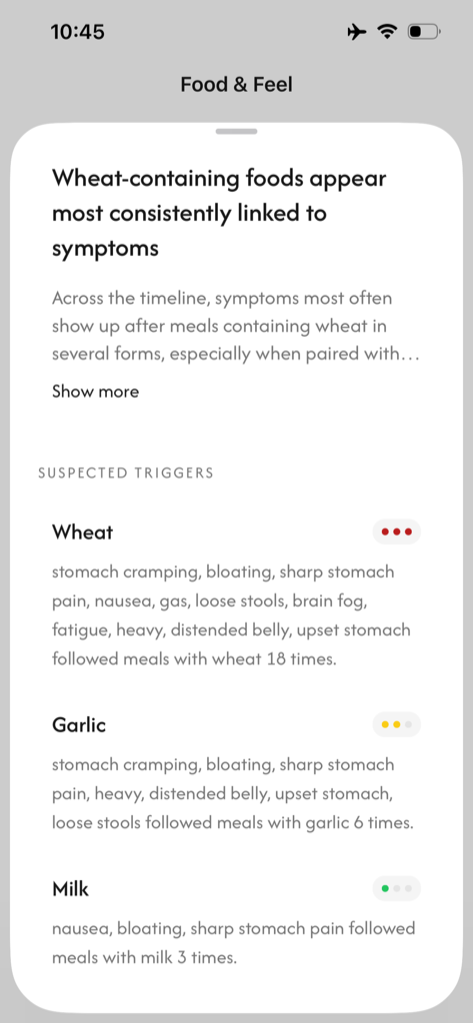
Because Food & Feel also tracks FODMAPs, insights can show whether onion and garlic cluster with your wheat-related logs — an observation worth raising with your doctor.
-
Reintroduce with a record
Log your reintroduction and watch the timeline. You end up with organised observations rather than a vague feeling.

Food & Feel is a wellness and tracking app. It is not a regulated medical device and does not provide medical advice, diagnosis, or treatment. Always talk to a doctor or registered dietitian about persistent symptoms.