
How to Do an Elimination Diet Without Losing Your Mind
Quick answer
In a typical elimination diet, suspected trigger foods are removed for 2–4 weeks, then reintroduced one at a time with a few days between tests, while symptoms are tracked throughout. Consistent tracking is what makes the observations useful — and it’s best done with guidance from a doctor or dietitian.
An elimination diet is a structured way to observe how your body responds when certain foods are removed and later reintroduced. Done carefully — ideally with professional guidance — it can generate useful observations. Done sloppily, it’s weeks of restriction without much to show for it.
The typical protocol
- Pick your suspects from your food diary — rather than eliminating blindly. Commonly explored ones: dairy, wheat/gluten, onion, garlic, eggs, soy.
- Eliminate consistently for 2–4 weeks. Partial elimination gives you partial observations — hidden sources count.
- Review whether symptoms changed. If nothing changed, your suspects may have been wrong — or food may not be the main factor.
- Reintroduce one food at a time, in normal portions, waiting several days between tests to allow for delayed reactions.
- Record everything — the observations are only as good as the log behind them.
Where elimination diets commonly go wrong
Three classic pitfalls: hidden ingredients sneak in and muddy the elimination phase (garlic powder is everywhere); reintroductions are rushed or overlapping so reactions are hard to attribute; and nothing gets written down, so at the end there’s a vague feeling instead of a record.
Restrictive eating also carries real nutritional risks — involve a doctor or dietitian, especially if you’re restricting more than a couple of food groups or planning a longer elimination.
Supporting your elimination diet with Food & Feel
Food & Feel helps with the three common pitfalls — hidden ingredients, messy reintroductions, and inconsistent records.
-
Spot hidden ingredients
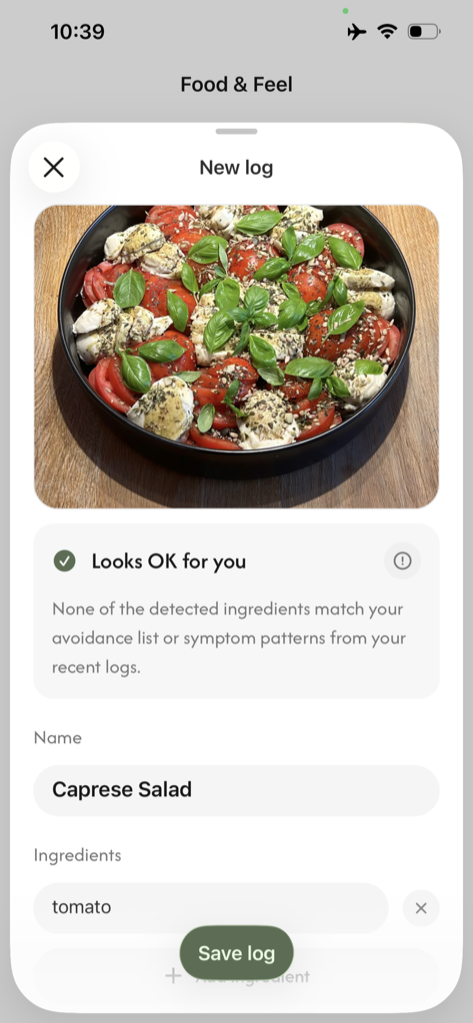
Scan labels, barcodes, and meals — Food & Feel helps itemise ingredients and flags the foods you’re currently avoiding, including powdered and processed forms that are easy to miss.
-
Keep an effortless record
Every meal and symptom is logged with a timestamp in one timeline — your elimination and reintroduction history in one place.
-
Watch reintroductions closely
When you reintroduce a food, log it and tap in any symptoms over the following days. The timeline makes delayed reactions easier to line up with the right test.
-
End with a record, not a feeling
Insights summarise how often each ingredient preceded your logged symptoms — observations you can bring to your doctor or dietitian.

Food & Feel is a wellness and tracking app. It is not a regulated medical device and does not provide medical advice, diagnosis, or treatment. Always talk to a doctor or registered dietitian about persistent symptoms.