
Why Am I Bloated After Eating? Common Causes & How to Explore Yours
Quick answer
Post-meal bloating is often associated with fermentable carbohydrates (FODMAPs) like onion, garlic, wheat, and lactose, though eating habits and underlying conditions can also play a role. Because reactions can be delayed and dose-dependent, tracking meals and symptoms for a few weeks may help you and your doctor explore possible causes.
If your stomach often feels tight, swollen, or gassy after meals, you’re dealing with one of the most common digestive complaints there is. The possible causes vary from person to person — which is why understanding your own situation usually starts with observation.
Common possible causes of post-meal bloating
Persistent bloating is often discussed in connection with a handful of factors:
- FODMAPs — fermentable carbs in onion, garlic, wheat, beans, apples, and more that gut bacteria ferment into gas.
- Lactose intolerance — undigested lactose from milk, cream, and soft cheese fermenting in the colon.
- Other intolerances — fructose malabsorption, histamine sensitivity, or non-celiac gluten sensitivity.
- Eating habits — eating fast, carbonated drinks, chewing gum, very large meals.
- Underlying conditions — IBS, SIBO, or celiac disease, which need a doctor’s evaluation.
Why the cause can be hard to spot
Bloating can appear hours after the meal involved — sometimes the next day — so you might blame lunch when breakfast played a part. Dose can matter too: a little garlic may be fine while garlic plus onion plus wheat in the same day is a different story.
Memory struggles with delayed, dose-dependent reactions. A written record helps: track what you eat at the ingredient level, track when bloating hits and how severe it is, and over a few weeks patterns may become easier to see.
When to see a doctor
Persistent bloating — especially alongside weight loss, blood in stool, severe pain, or worsening symptoms — should be evaluated by a doctor. Tracking is a complement to professional care, never a replacement.
Exploring your bloating patterns with Food & Feel
Food & Feel helps turn "I’m always bloated" into an organised record of meals and symptoms — something concrete you can reflect on and share with your doctor.
-
Log meals with a photo
Food & Feel helps detect the ingredients in your meal, including commonly discussed bloat-associated ingredients like onion, garlic, wheat, and lactose.
-
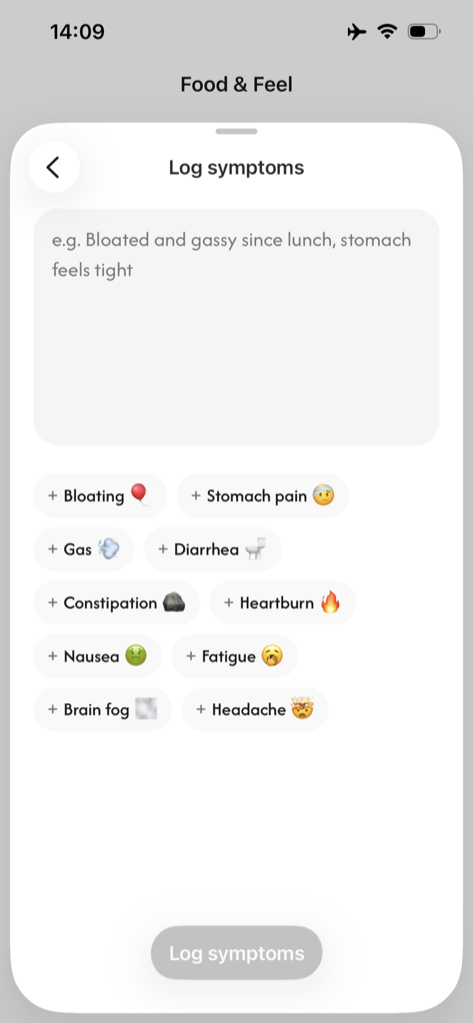
Tap symptoms when bloating hits
One tap logs bloating with a timestamp — whether it’s 30 minutes or 8 hours after eating, the timing is captured.
-
Review your own patterns
Insights highlight which ingredients have most often preceded your logged bloating — including delayed and stacked patterns.
-
Check foods before eating
Scan any food or barcode and see whether it contains ingredients that match patterns from your own logs — a personal heads-up, not a medical judgment.

Food & Feel is a wellness and tracking app. It is not a regulated medical device and does not provide medical advice, diagnosis, or treatment. Always talk to a doctor or registered dietitian about persistent symptoms.