
Eating Out with IBS: Practical Ways to Order More Comfortably
Quick answer
Strategies many people find helpful: scout the menu in advance, favour simple grilled dishes with sauces on the side, ask about garlic and onion in bases, and check dishes against the patterns you’ve noticed in your own logs before ordering. It won’t make any meal risk-free, but it can make choices more informed.
For many people with IBS, restaurants are the hardest part of managing day to day. You can control your kitchen — you can’t control the splash of cream in the sauce or the garlic in the marinade. Eating out will always involve some unknowns, but there are ways to stack the odds in your favour.
Why restaurant meals can be tricky
Restaurant cooking leans on exactly the ingredients that many people with IBS report reacting to: garlic and onion in many bases, cream and butter for richness, wheat in sauces and coatings, and portions well beyond your usual amounts. Add FODMAP stacking across a starter, main, and drink, and a "safe-looking" dinner can add up.
Strategies many people find helpful
- Read the menu online beforehand — deciding calmly at home beats deciding hungry at the table.
- Default to simple preparations: grilled meat or fish, plain rice or potatoes, salad with dressing on the side.
- Ask two questions: "does this contain onion or garlic?" and "can I get the sauce on the side?" — they cover many common concerns.
- Watch the extras: beer, wine, fried starters, and desserts can add to the day’s load.
- Log what you ate anyway — restaurant meals are valuable data points, not just bad luck.
Ordering more informed with Food & Feel
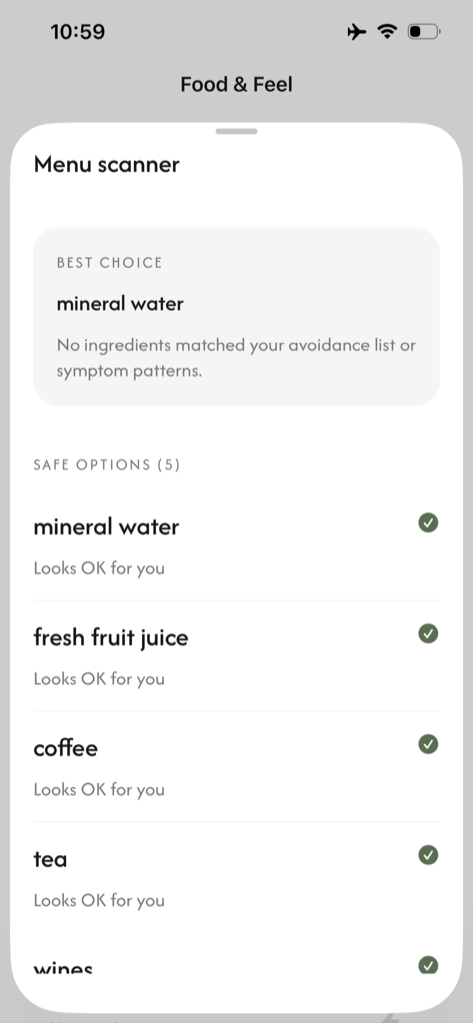
Food & Feel lets you check restaurant options against your dietary frameworks and the patterns in your own logs before you order.
-
Check the menu before you go
Explore restaurant menu options in the app — dishes are checked against your dietary frameworks and the patterns in your logs before you’re anywhere near the table.
-
Snap the dish when it arrives
A photo logs the meal and helps detect ingredients — including the garlic and cream the menu never mentioned.
-
Get a personalised heads-up
Flags like "looks OK for you" or "consider skipping" reflect your own logged history and settings — they’re informational pointers to weigh, not guarantees.
-
Learn from every meal out
If a restaurant meal doesn’t sit well, the log turns it into an observation: which ingredients, which amounts, which combination.

Food & Feel is a wellness and tracking app. It is not a regulated medical device and does not provide medical advice, diagnosis, or treatment. Always talk to a doctor or registered dietitian about persistent symptoms.