
Low FODMAP Diet for Beginners: Phases, Foods & Checking What You Eat
Quick answer
FODMAPs are fermentable carbs (found in onion, garlic, wheat, certain fruits, and lactose-containing dairy) that are commonly discussed in connection with IBS symptoms. The low FODMAP diet runs in three phases — elimination, reintroduction, personalization — and is best done with professional guidance. A food checker that flags high-FODMAP ingredients can make each phase easier to follow.
The low FODMAP diet is a well-known, extensively studied dietary approach that many people with IBS explore with their dietitian or doctor. It’s also famously hard to follow — FODMAPs hide in everyday ingredients like onion, garlic, wheat, honey, and apples.
What FODMAPs are
FODMAP stands for Fermentable Oligosaccharides, Disaccharides, Monosaccharides And Polyols — short-chain carbohydrates that are poorly absorbed in the small intestine. They draw water into the gut and ferment into gas, which for sensitive guts can mean bloating, discomfort, and altered bowel habits.
The three phases
- Elimination (typically 2–6 weeks): high-FODMAP foods are reduced to observe whether symptoms change.
- Reintroduction: FODMAP groups are tested one at a time, a few days apart, to explore which groups and doses seem relevant for you.
- Personalization: a longer-term way of eating is built around your observations — many people find they can bring plenty of foods back.
The hard part: knowing what’s actually in your food
Onion and garlic powder appear in stocks, sauces, spice mixes, and crisps. Wheat hides in soy sauce and processed meats. Reading every label against a FODMAP list is where many people give up — especially in the supermarket or a restaurant.
The low FODMAP diet is intended to be temporary and is best undertaken with guidance from a dietitian or doctor; the elimination phase is intentionally restrictive and isn’t meant to become a permanent diet.
Following low FODMAP with Food & Feel
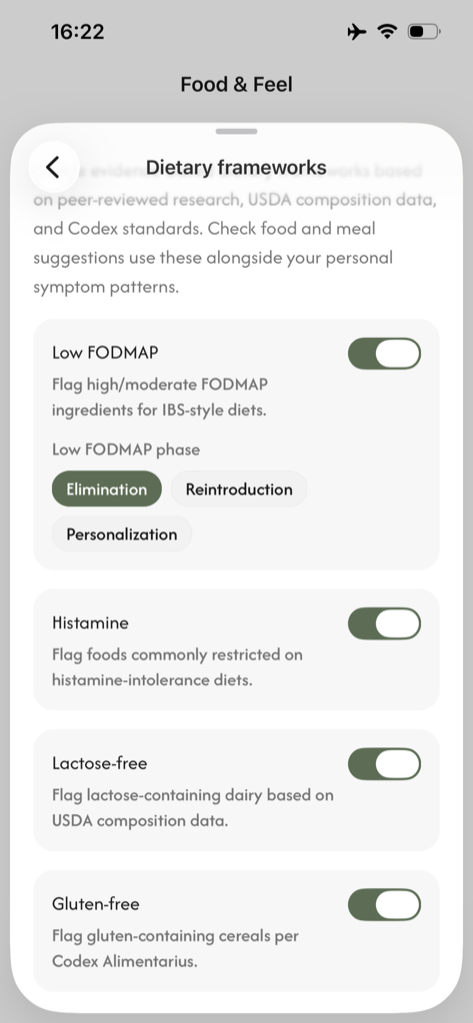
Food & Feel includes a Low FODMAP framework with a phase setting that matches where you are in the diet. It’s a convenience tool to support the process — not a substitute for professional guidance.
-
Turn on the Low FODMAP framework
Enable Low FODMAP in dietary frameworks and pick your phase — Elimination, Reintroduction, or Personalization. Checks draw on published research, USDA composition data, and Codex standards, though no database is exhaustive.
-
Scan foods as you go
Scan a barcode in the supermarket, photograph a meal, or paste a menu description — ingredients commonly classified as high or moderate FODMAP are flagged for your review.
-
Track symptoms through each phase
Log how you feel during elimination and each reintroduction test. Your timeline becomes a record you can review and share with your dietitian.
-
Personalise beyond the lists
Food & Feel combines FODMAP information with patterns from your own logs — so its flags reflect your recorded history, not just generic lists.

Food & Feel is a wellness and tracking app. It is not a regulated medical device and does not provide medical advice, diagnosis, or treatment. Always talk to a doctor or registered dietitian about persistent symptoms.